


Is Your AC Low on Refrigerant? Here’s How to Tell
Knowing how to check if AC refrigerant is low can save you from a costly compressor replacement — and it starts with recognizing a few clear warning signs. Here is a quick summary of what to look for:
- Warm or weak air blowing from your vents even when the system is running
- Ice buildup on the copper refrigerant lines or indoor evaporator coil
- Hissing or bubbling sounds near the indoor or outdoor unit
- Longer cooling cycles — the system runs constantly but never reaches your set temperature
- Higher electricity bills without any improvement in comfort
- Temperature difference test result below 7°C between your return air and supply air
Your AC is a sealed, closed-loop system. Unlike fuel in a car, refrigerant does not get used up — it continuously circulates to transfer heat out of your home. If the level drops, something is wrong. There is either a leak, an installation defect, or a mechanical fault. A low refrigerant level is never a normal part of routine maintenance.
Understanding these symptoms early matters because running your AC with low refrigerant puts serious strain on the compressor — the most expensive component in the system. The longer you wait, the greater the risk of turning a manageable repair into a full system replacement.
I’m Jennifer Raymond, and in this guide I’ll walk you through every safe check a homeowner can do at home, how to interpret what you find, and when it’s time to call a certified HVAC technician.
Key how to check if ac refrigerant is low vocabulary:
- Frozen Evaporator Coil: What Causes It and What to Do
- AC Troubleshooting Before Calling a Pro
- AC Keeps Turning On and Off: What’s Wrong?
Common Signs Your Home AC is Low on Refrigerant
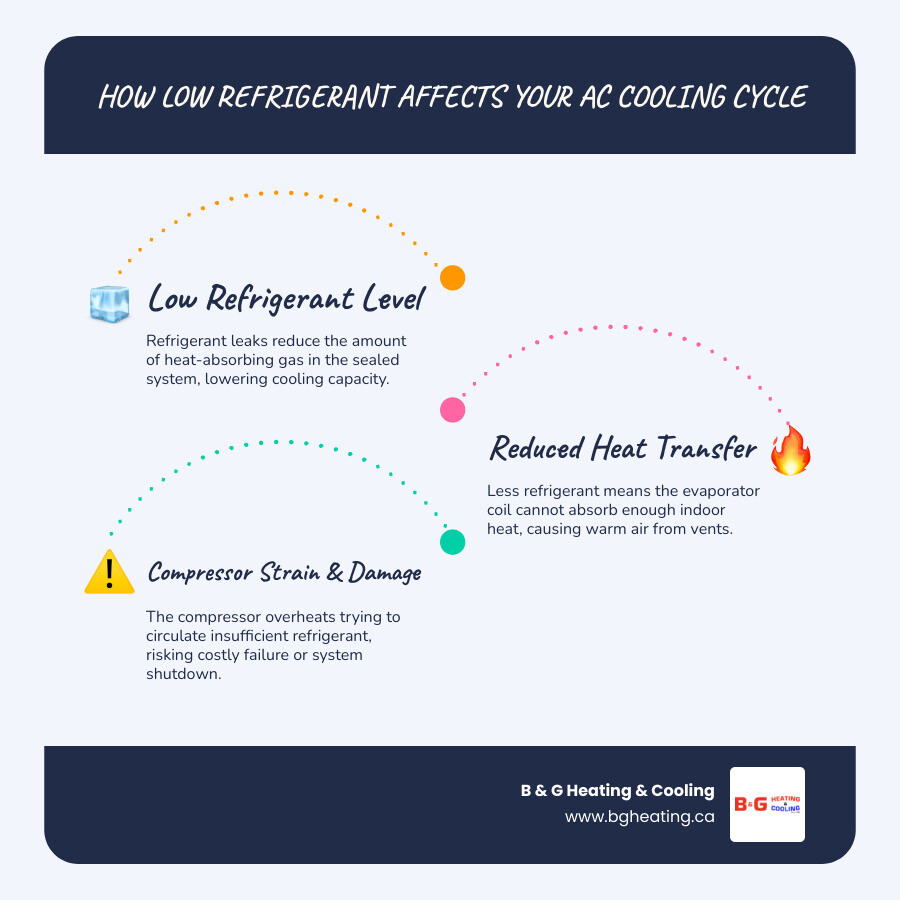
When your air conditioner’s refrigerant levels drop, the entire cooling cycle is thrown out of balance. Because refrigerant is responsible for absorbing heat from your indoor air and carrying it outside, a shortage of this vital chemical fluid means your system has to work twice as hard to do half the job.
If you suspect your system is struggling, there are several key indicators of a leak. Recognizing these Air Conditioning Repair Warning Signs early can prevent severe mechanical breakdowns.
Warm Air and Weak Airflow from Vents
One of the most obvious signs of a low refrigerant charge is when the air coming out of your supply vents feels lukewarm or weak. When you place your hand over a vent, the air should feel crisp and distinctly cold.
If the air is barely cool or matches the room’s ambient temperature, the system lacks the heat-transfer capacity to lower the temperature of the return air. This results in weak cooling and a complete loss of indoor comfort, leaving your household feeling clammy, sticky, and frustrated during those humid summer afternoons.
Ice on the Refrigerant Lines or Evaporator Coil
It might seem counterintuitive that an air conditioner short on cooling fluid would freeze up, but this is one of the most common physical reactions to low pressure. When refrigerant levels drop, the pressure inside the evaporator coil plummets. This pressure drop causes the temperature of the coil to fall well below the freezing point of water.
As warm, humid indoor air passes over the freezing copper lines and evaporator coil, the moisture in the air immediately condenses and freezes. This creates a compounding cycle of ice accumulation:
- The initial layer of ice acts as an insulator, preventing the remaining refrigerant from absorbing heat.
- The coil gets colder, causing more moisture to freeze.
- This creates a severe airflow restriction, eventually encasing your entire indoor coil and outdoor copper lines in a thick block of ice.
Hissing or Bubbling Noises
Because your air conditioning system is pressurized, a physical leak in the copper joints, service valves, or coil connections will often make audible sounds.
If you have a gas leak where the high-pressure refrigerant is escaping, you may hear a distinct, continuous hissing sound near either the indoor evaporator cabinet or the outdoor condenser. If the refrigerant is in a semi-liquid state at the leak point, it may produce a bubbling or gurgling noise instead. These sounds are clear indicators of physical damage or wear that requires immediate professional attention.
How to Check if AC Refrigerant Is Low: Safe Homeowner Tests
Before you pick up the phone to schedule a service call, there are several safe, non-invasive checks you can perform yourself. You do not need professional manifold gauges or specialized tools to gather helpful diagnostic clues.
Why Knowing How to Check if AC Refrigerant Is Low Prevents Compressor Damage
Your air conditioner’s compressor relies on the cool, returning refrigerant gas to keep itself lubricated and running at a safe operating temperature. When the system runs dry, the compressor overheats, undergoes massive friction, and will eventually suffer complete mechanical failure.
By learning how to spot the signs of low refrigerant early, you can perform preventative maintenance and shut down your system before a minor leak ruins the heart of your air conditioner. If you find ice or suspect a leak, turn the system off at the thermostat immediately to let it thaw and protect the compressor. For more tips on initial diagnostics, check out our guide on How to Troubleshoot AC Issues DIY Before Calling a Pro.
Step-by-Step: How to Check if AC Refrigerant Is Low Using the Temperature Difference Test
The temperature difference test (often called the Delta T test) is the most reliable scientific check a homeowner can perform without specialized gauges. This test measures how efficiently your air conditioner is removing heat from the air.
Here is how to perform it:
- Prepare the system: Ensure your air filter is completely clean. Turn your AC on cool mode, set the thermostat to a low temperature, and let the system run continuously for 10 to 15 minutes so the pressures and temperatures stabilize.
- Measure the return air: Hold a digital thermometer close to the return air grille (where the air enters the system to be cooled) and record the temperature.
- Measure the supply air: Find a supply vent close to the indoor unit and measure the temperature of the cold air blowing out.
- Calculate the difference: Subtract the supply air temperature from the return air temperature.
How to Interpret Your Delta T Results:
- Normal Range (8°C to 14°C / 14°F to 25°F): Your system is operating efficiently and likely has a proper refrigerant charge.
- Low Range (Less than 7°C / 13°F): The system is not cooling the air effectively. This is a primary indicator of low refrigerant or a failing compressor.
- High Range (Greater than 15°C / 27°F): This usually points to an airflow restriction, such as a severely clogged air filter or blocked ductwork, rather than a refrigerant issue.
If your system falls short on this test, you may want to read more on How Do You Troubleshoot an AC Problem? to rule out other system issues.
The Copper Pipe Temperature and Condensation Check
Another quick physical check involves inspecting the copper lines connecting your indoor evaporator coil to the outdoor condenser unit.
Walk outside to your condenser unit and locate the two copper lines (usually insulated with black foam).
- The Suction Line (Thick, insulated copper pipe): Under normal operating conditions, this pipe carries cool gas back to the compressor. It should feel ice-cold to the touch (like a cold beverage) and should be “sweating” with visible condensation. If this line is warm, dry, or covered in frost, your refrigerant is likely low.
- The Liquid Line (Thin, uninsulated copper pipe): This line carries warm liquid refrigerant. It should feel warm to the touch. If it feels cold or has frost on it, there is a major pressure drop or restriction in the system.
Low Refrigerant vs. Other Common AC Problems
It is easy to mistake other system failures for a refrigerant leak. A dirty air filter, for example, can restrict airflow so severely that it causes the evaporator coil to freeze, mimicking low refrigerant symptoms.
To help you distinguish between these issues, we have put together a comparison table. You can also dive deeper into identifying these differences in our guide on Identifying Common AC Issues.
| Symptom | Low Refrigerant Level | Dirty Air Filter / Airflow Issue | Compressor Failure |
|---|---|---|---|
| Airflow Strength | Normal strength, but air is warm/lukewarm | Very weak, restricted airflow from vents | Normal strength, but air is warm |
| Coil Freezing | Yes, caused by low system pressure | Yes, caused by lack of warm air crossing the coil | No |
| System Sounds | Hissing or bubbling near lines | Whistling or straining motor sounds | Loud clicking, screeching, or humming |
| System Cycle | Runs continuously without stopping | Short cycling (turning on and off rapidly) | Short cycling or failing to start at all |
| Condensation Drain | Very little to no water draining | Normal to high water drain (until frozen) | No water draining |
Frequently Asked Questions About Low AC Refrigerant
Can I check refrigerant levels without professional tools or gauges?
No, you cannot measure the exact amount of refrigerant or system pressure without professional tools like manifold gauges and temperature probes. While visual signs (like ice) and temperature tests (like the Delta T test) are excellent indicators of a problem, a certified technician must hook up physical gauges to measure subcooling and superheat to confirm the exact charge.
What causes an AC to lose refrigerant, and does it ever need to be topped off?
An air conditioner should never need to be topped off as a matter of routine maintenance. Because it is a completely sealed system, refrigerant only escapes if there is a physical leak. Leaks are typically caused by vibration wear, mechanical friction, or formicary corrosion (pinhole leaks in the copper coils). If your system is low, you must find and perform Fixing AC Refrigerant Leak Issues rather than simply recharging the system.
Why is it dangerous or illegal to add refrigerant without fixing the leak?
Refrigerants are powerful greenhouse gases and ozone-depleting substances. In Ontario, environmental regulations strictly prohibit the intentional venting or adding of refrigerant to a known leaking system without first locating and repairing the leak. Furthermore, handling chemical refrigerants without proper licensing and safety gear poses severe safety hazards, including chemical burns, frostbite, and respiratory risks.
Conclusion
When your home’s cooling system starts falling behind on hot days, understanding how to check if AC refrigerant is low gives you the knowledge to act before minor issues turn into permanent system damage. While simple checks like the temperature difference test and visual inspections for ice are safe to do yourself, resolving a refrigerant issue always requires a licensed professional.
At B & G Heating, we have spent years helping families stay comfortable throughout Hamilton, Burlington, Oakville, and the surrounding areas. Our experienced, certified technicians can perform precise professional diagnostics, locate hard-to-find leaks, and help you weigh the decision to repair versus replace an older system.
If your air conditioner is blowing warm air or showing signs of a leak, do not let a struggling compressor run up your utility bills. Contact us today to schedule a professional inspection and keep your home cool all summer long. Explore our full range of solutions on our B & G Heating Services and Products page.