Nobody daydreams about duct sealing. There's no shiny box, no app, nothing to show the neighbours. But if we ranked upgrades by comfort gained per dollar spent, sealing leaky ductwork would embarrass half the equipment on the market. Here's the case for the unglamorous fix.
Your ducts probably leak more than you think
Field studies across North America put typical duct leakage at 20–30% of total system airflow. Ducts were historically assembled with cloth "duct tape" (which dries and falls off within years), unsealed joints, and unsealed boot connections at every register. Every joint is a small leak; a house has dozens.
In Hamilton's housing stock the pattern is predictable: post-war bungalows in the east end with original galvanized trunk lines, century homes where ductwork was retrofitted into balloon framing, and even newer builds where speed won over sealing.
What leakage actually costs you
- Supply leaks dump heated or cooled air into the joist bays and mechanical room — you paid to condition it; the basement ceiling enjoys it.
- Return leaks are sneakier: they suck air in from wherever the duct passes — dusty joist cavities, musty crawl spaces, garage-adjacent walls — and deliver it to your lungs. Return leakage is an air-quality problem wearing an efficiency costume.
- The far-room problem: that bedroom that's never the right temperature is often just the last stop on a leaky duct run — the air gives up before it arrives.
If you're considering a bigger furnace because parts of the house never warm up, check the delivery system first. A right-sized system with sealed ducts beats an oversized one feeding leaks — and it's the more affordable path.
How sealing is actually done
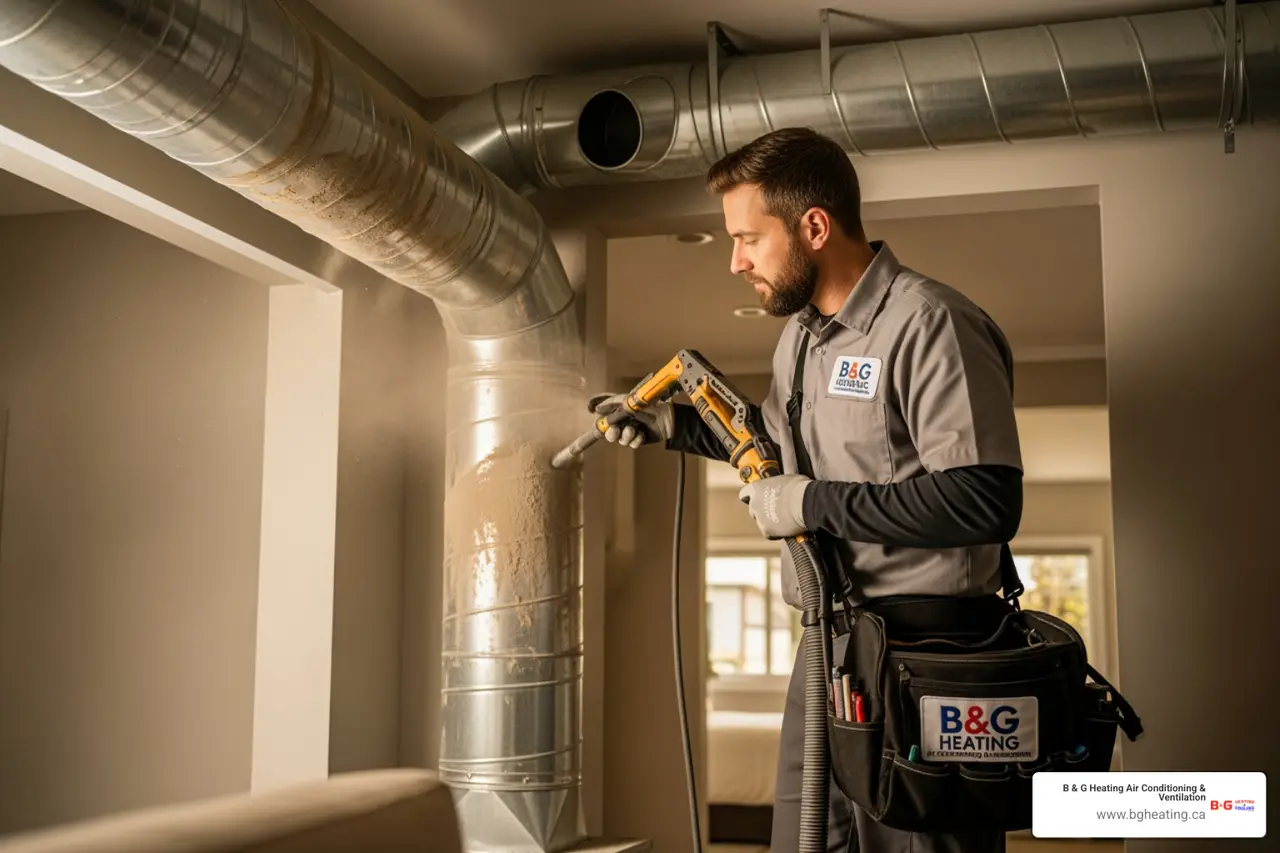
Accessible ductwork gets hand-sealed with mastic — a paint-on compound that flexes with thermal cycles instead of drying out like tape. Boots get sealed to floors and walls; the panned returns common in older Hamilton homes get closed up properly. For ducts buried in finished walls, aerosolized sealant can be blown through the system under pressure, plugging leaks from the inside. Before-and-after leakage numbers tell you exactly what you bought.
The knock-on benefits
Sealed ducts mean the filter actually filters all the air you breathe (unfiltered return leaks bypass it entirely), rooms even out, dust drops noticeably, and any equipment you buy later can be sized smaller and run more efficiently. It's the foundation that makes every other HVAC dollar work harder.
We can measure your system's leakage in about an hour and tell you honestly whether sealing is worth it for your house — some homes are tighter than their owners fear. Straight answers since 1989.